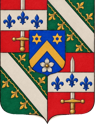
d'Horrer family FrançaisEnglishПо-русски

History of the d'Horrer family

A European family

A common history, from the Holy Roman Empire to the children of Marie-Joseph d'Horrer — the ancestors of us all. Their descendants then form three branches: Russian, French and Italian.

« Nec flecti, nec frangi » — neither bent nor broken

Read our common history Introduction

A word from Yves d'Horrer

The history of the d’Horrer family is rich and has seen many twists and turns, carrying it through revolutions and exiles, leading it to settle in various countries and to experience all kinds of hardships. I therefore felt that creating a simple genealogy of my ancestors would not sufficiently convey all of this lived experience, and I wished to present it as a true history.

In a second stage, I went beyond the narrow limits of our direct ancestors to take into account the discovery of the branch that remained in Russia, which is the eldest branch of the family and is widely represented.

All of this may result in a reading of the whole that is somewhat complex… but that is dictated by our history itself.

I am, of course, open to any additional information that readers may wish to share with me.

Yves d’Horrer

Our common history

10 chapters · from the 16th to the 19th century

  1. 1

    The Holy Roman Empire

    From Strasbourg to Swabia. On 25 August 1627, Ferdinand II grants Eberhard-Georges Horrer and his descendants the nobility of the Holy Roman Empire.

    Document · the diploma of 1627 and its translation
  2. 2

    Alsace: 17th century

    The knight Christophe Horrer (1640–1713), ironmaster in Lauterbourg, and his descendants.

  3. 3

    Alsace, 18th century (1)

    Jean-Georges Horrer (1676–1747), clerk of the court in Lauterbourg and later counsellor to the King, his wife Anne-Élisabeth de Goll, their thirteen children and the Strasbourg town house of 1745.

  4. 4

    Alsace, 18th century (2)

    Georges-Joseph Horrer (1713–1750), counsellor at the Sovereign Council, and his marriage to Jeanne-Rosalie de Brobeck. The Bruder and Capriol alliances.

  5. 5 · Digression

    The branch that did not emigrate

    It begins with Joseph-André, Philippe-Xavier's brother, who did not leave in 1792.

    Skip it, continue the common history →
  6. 6

    Revolution and emigration to Russia

    1792: Philippe-Xavier leaves France with his sons. The army of Condé, then, in 1798, the departure for Moscow.

    Document · certificate of the Prince of Condé, 1798
  7. 7

    In Russia

    In the service of the Emperor of Russia, in the early 19th century.

  8. 8

    Historical context in 1830

    The July Revolution and legitimist loyalty to the Bourbons.

  9. 9

    19th century: Marie-Joseph d'Horrer

    Born in Strasbourg in 1775, an émigré at sixteen, settled in Russia. A legitimist, close to the court of Charles X in exile.

    Document · letter from the secretary of Charles X
  10. 10

    The children of Marie-Joseph

    The last common generation: the ancestors of us all. Their descendants form the three branches.

Then three branches

Each one continues the common history from the children of Marie-Joseph.

Russian branch The senior branch, and the largest: from the Empire to 1917, then the Soviet era and the Dorrers of today. Read → French branch Joseph and Arsène, Léon, then Léon-Guy in the 20th century. Read → Italian branch Alexandre, then Ernesto and his family. A branch that has now died out. Read →